

Icon: Rose Wylie
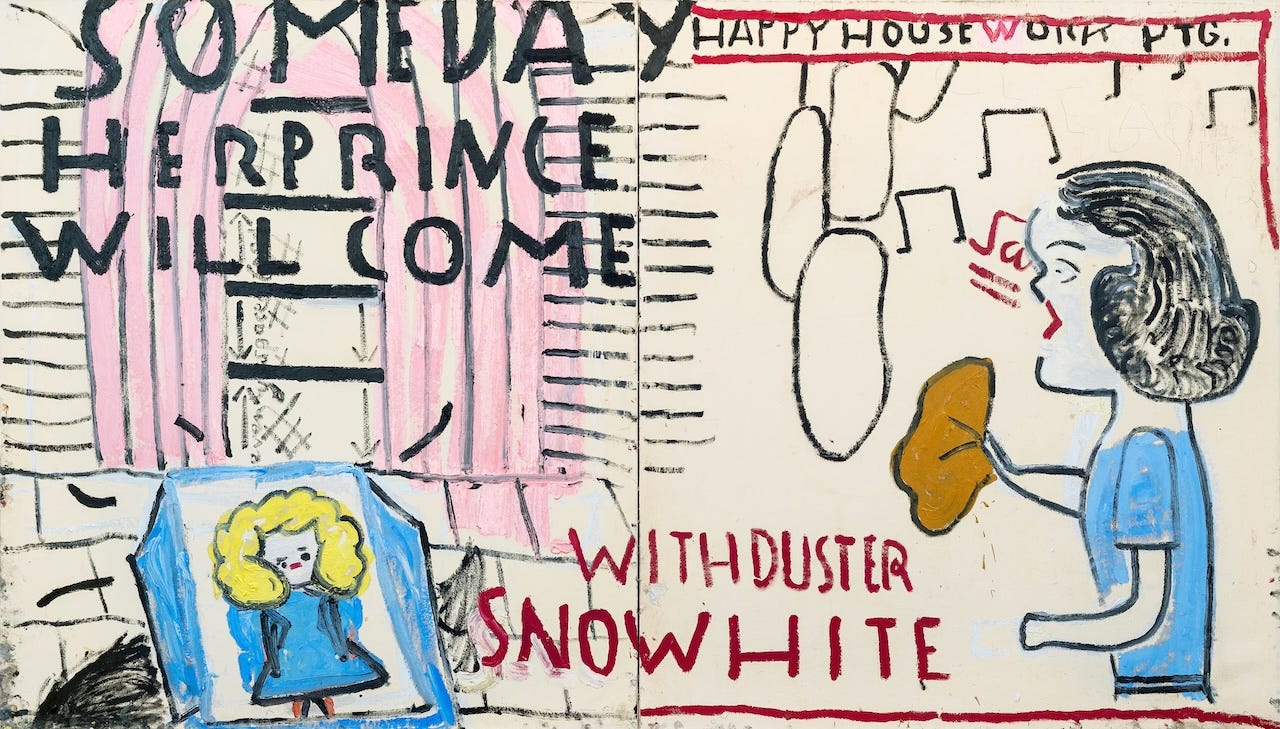
Rose Wylie’s triumphant exhibition at the Royal Academy has opened. She rather famously took decades off from her practice to raise her children, a lacuna that contributes to the mythology of her success later in life. Last month she told the Guardian about what it meant for her to focus her attention alternately on painting and parenting:
If you are involved, emotionally and mentally, in painting, which obsesses you, your mind is elsewhere. I decided it was better to be around. People say, ‘Are you angry?’ I was never angry, because working with children is full of creativity.
Her son is now her archivist and you get the sense that her family is very supportive of her practice now, which is not always what we find in cases where the painting keeps an artist from the parenting.
Field Trip: Whitney Biennial
One of the highlights of this year’s untitled Whitney Biennial is a cluster of works that take on motherhood implicitly and explicitly. The unexpected pairing at the heart of it is that of Andrea Fraser and her mother, Carmen de Monteflores. Sarah Cascone in Artnet breaks down the relationship.
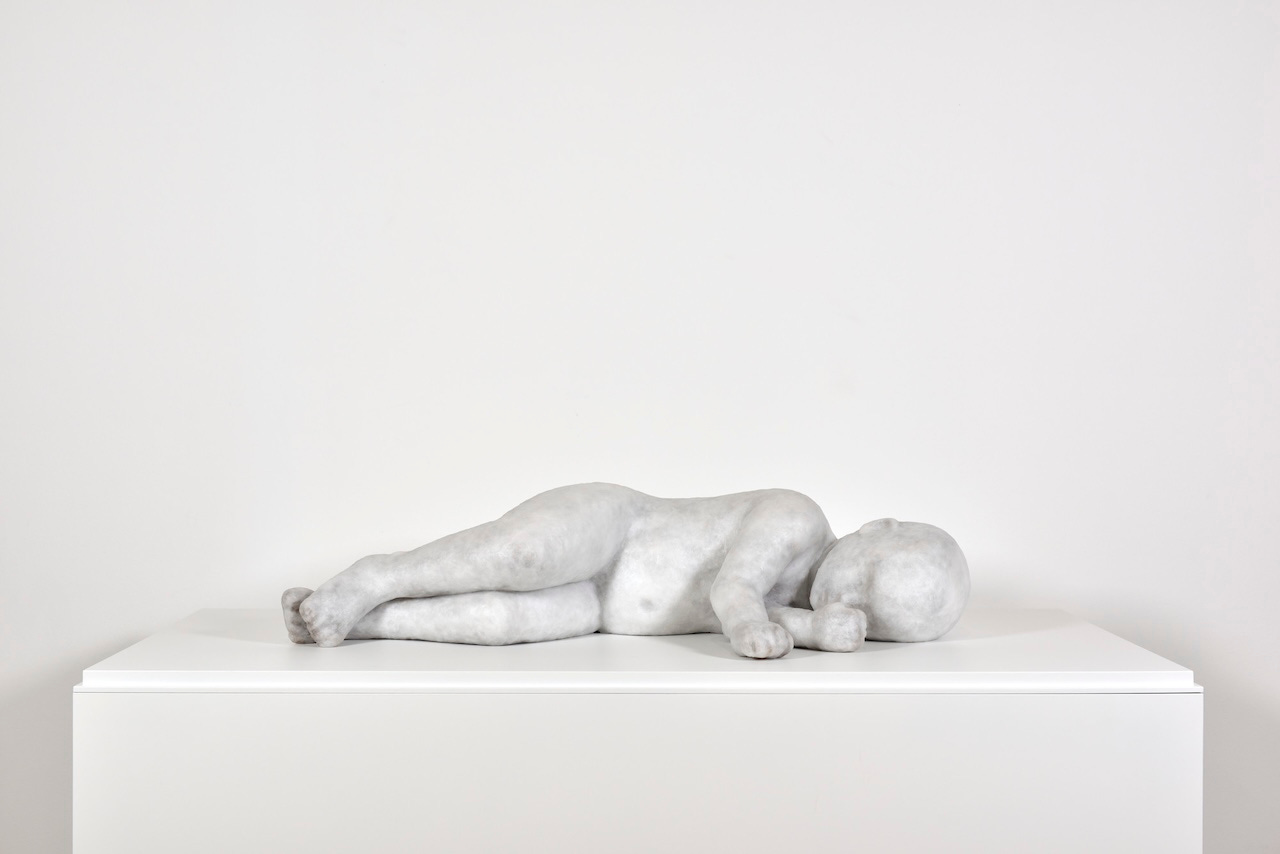
Andrea contributes these wax sculptures of babies, which allude to the work of the artist as a labor of love, a process of birthing and intimacy. They are described as sleeping and yet they are eerily still, too heavy, their limbs sagging into their plinths. They are described as toddlers and yet they are infantile. There are five of them, like Andrea and her siblings. They are made out of a kind of wax that never fully hardens, so they are technically always melting into the world around them. “There is no escaping the equation of artworks and children. They exist, psychologically, in a continuum of attention and care.”
The babies are complemented by a suite of slickly attractive Nour Mobarak wall works, one of which consists of a cast of her pregnant belly and the rest of which contain materials including blood, breast milk, and semen, as well as a recording of the flows and pulses of the body during pregnancy.


Carmen, for her part, is represented by a raucous painting of brightly colored entangled bodies that dates to the late 1960s. In a conversation between Carmen and Andrea included in the catalogue to the exhibition, she attributes the style to an excess of erotic energy that followed after being so focused on parenting.
Carmen studied art in Paris and New York, then married and, after spending four years as a full-time housewife on a ranch in Montana, kickstarted her creative work again: “I would put the three kids into this big car and drive around. The kids slept in the back, and I sketched landscapes.” She made 100 paintings in five years. “I did as much as I could, mostly during naps. I was very disciplined.” She started working with shaped canvases, beginning with a tightly framed portrait of her own mother and developing into this series of colorful nude bodies, a feminist take on the pop art of the era.
That’s from the entry on Carmen in the catalogue. In the entry on Andrea, Carmen asks the questions: “Maybe … I was too cut off from my being an artist to think I had influenced you.” “Mom, being in your studio is one of my earliest memories. You were working on your paintings, and I was there with my blocks, building things. After you stopped painting, you still offered art classes to neighborhood kids, and I participated in those. And your paintings were always there in the house. I grew up with them, along with your art books.”
Then Andrea gets into the psychodynamics of the family: “On some unconscious level, I believe that I destroyed your creativity … by being born.” And Carmen responds: “In this process that we’ve been going through for the past two years with my paintings, I’ve been feeling very cared for.”
Elsewhere in the exhibition we also get Mariah Garnett’s Songbook, a film that documents the process of connecting with a group of opera singers, experimental musicians, and theatrical artists to reanimate the diaries of Mariah’s great-great-aunt, a pianist and composer who moved to Egypt in the 1920s to write an opera. There is a lot happening here, but it’s another fascinating look at the dynamics of family ties and the creative urge.
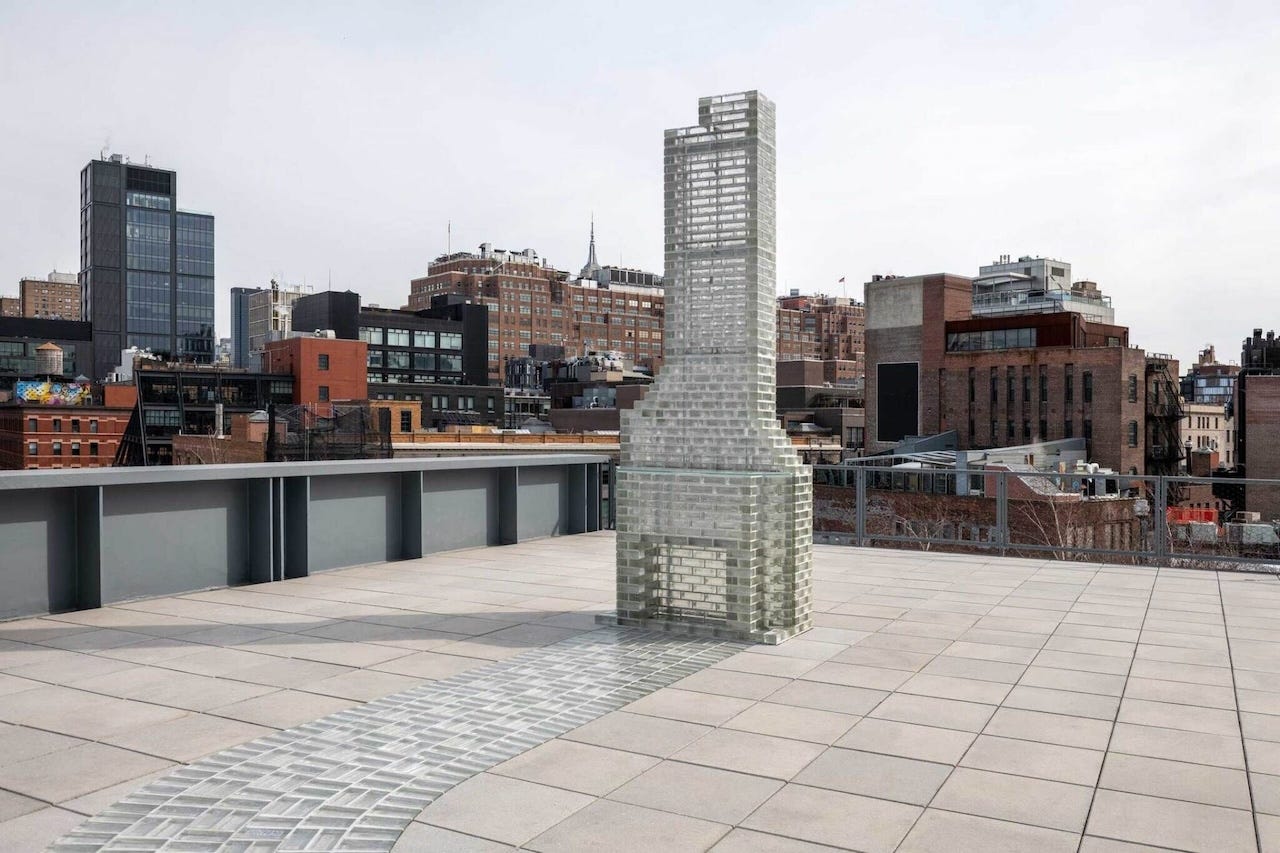
Finally, probably the defining work of the Biennial will be Kelly Akashi’s hearth of glass, a recreation of the only part of her Altadena home that was left standing after the fires that decimated parts of LA last spring. It’s a simple and beautiful gesture to the power of home—and to its portability.
Link: What to Do with Little Children at Home
So, what should we do with young children at home? The answer is: What you should have been doing for yourself all along. Cultivate a stimulating and rich home life which will provide the warm background for your family’s continued life together. Bring your child along with you in both your duties and creative pursuits.
Sometimes taking the long way home means taking home along with you.