

Icon: Michael Andrews
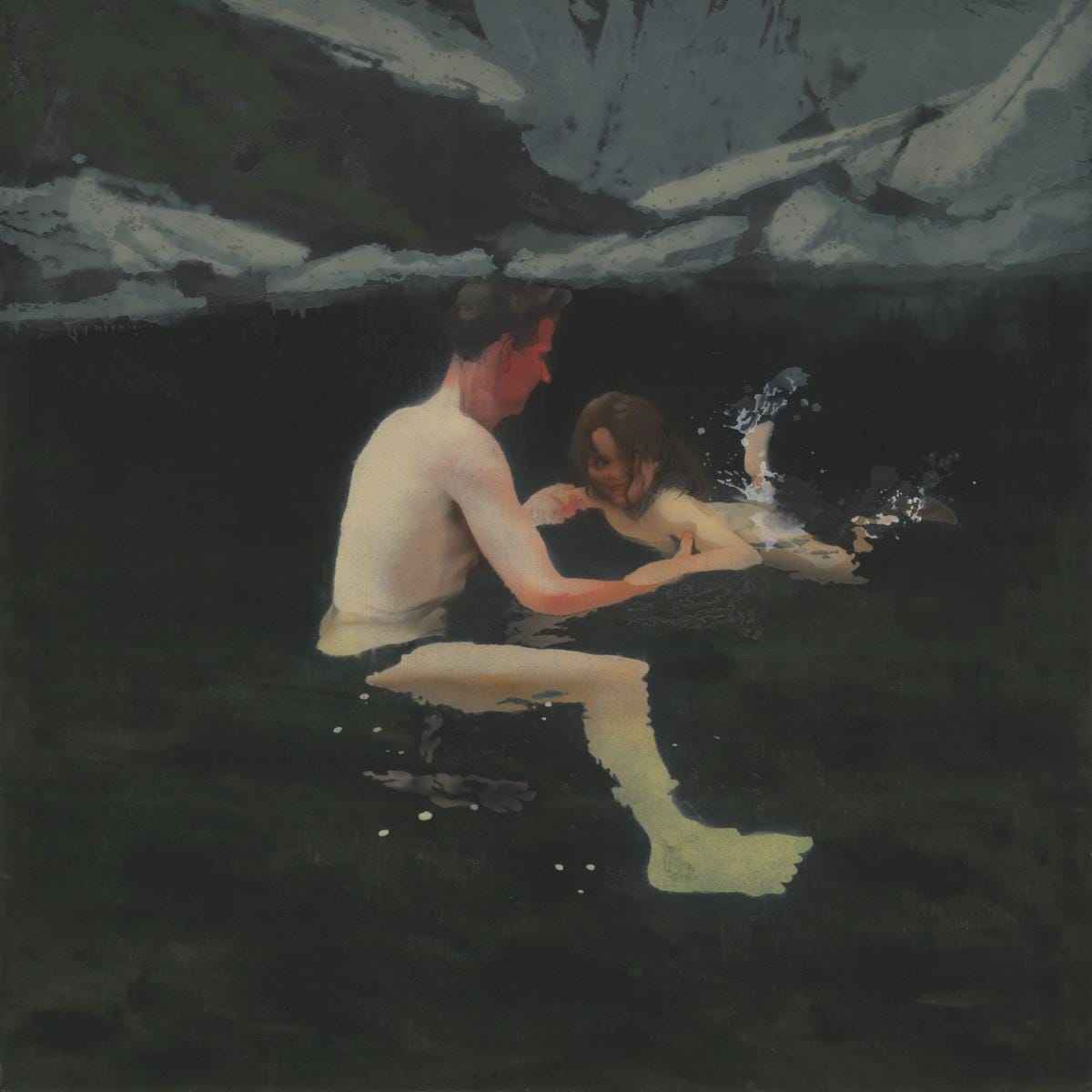
Melanie and Me Swimming (1978-9) is a masterpiece of twentieth century painting. Melanie is Michael Andrews’s daughter, an only child, and in the picture she is learning to swim in a dark rock pool while on holiday in Scotland. Part of the Tate collections, the painting is apparently one of the most popular postcard reproductions available in the gift shop. Speaking to The Standard in 2012, Melanie explains why:
“I think people wish they’d had a relationship like that with their father.”
She goes on to describe how her father’s practice intersected with her childhood:
“I don’t think Dad planned the picture. It just evolved out of the situation. When I started school, a few years before, he had started painting a series of fish, titled ‘School’ … I was about to leave primary school, was starting to wear school uniform, and the point about the fish was that they were wearing a kind of uniform; the picture is about my reaching another age. Everything about Dad’s paintings, whatever their subject matter, was to do with social situations and the way that people integrate and interact. That’s what makes them, like him, so enduring and so well-loved.”
I find this absolutely incredible, because while women artists have fought very hard for decades for the possibility of being taken seriously as artists regardless of whether or not motherhood becomes a part of their work, we very really encounter man artists who make fatherhood a core part of the content of his work. With Michael, maybe, we can see that there is a possibility for a loving family life to become constitutive of a practice that is generative, profound, and roundly respected. But it took both time and distance to get there.
The arc of Michael’s work is often understood in relatively simple terms: from the human landscape of early paintings of parties to the later humanist landscapes of Scotland and Australia, and from the groups of friends in those same party paintings to his later schools of fish. Each painting, taken on its own, is so mysterious and enigmatic, so impeccably composed, that it seems impossible to talk about them in broad strokes like this, as if this group of barracuda and that school of butterfly fish were separate projects entirely. And yet, at the same time, within each painting there are universes, spirals of nested configurations. Each painting stands alone, legible in its entirety, a complete key to and representation of a profound practice of looking and seeing. It says everything and lacks nothing, a perfectionist poetic economy of visual language that is crisp and disciplined, allusive and generous.
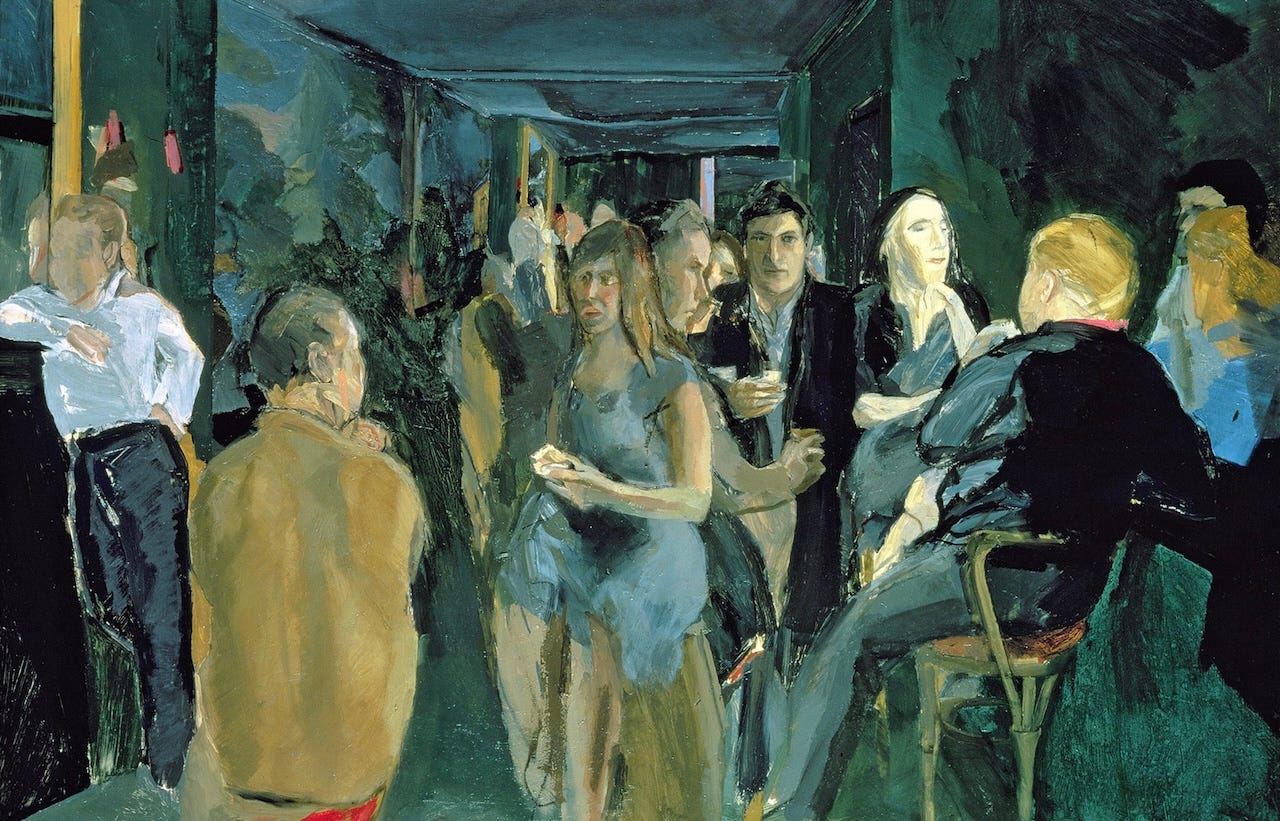
Some of Michael’s best known works tie into the same social graph that we have visited on several occasions. Colony Room I (1962) pictures Bacon and Freud.
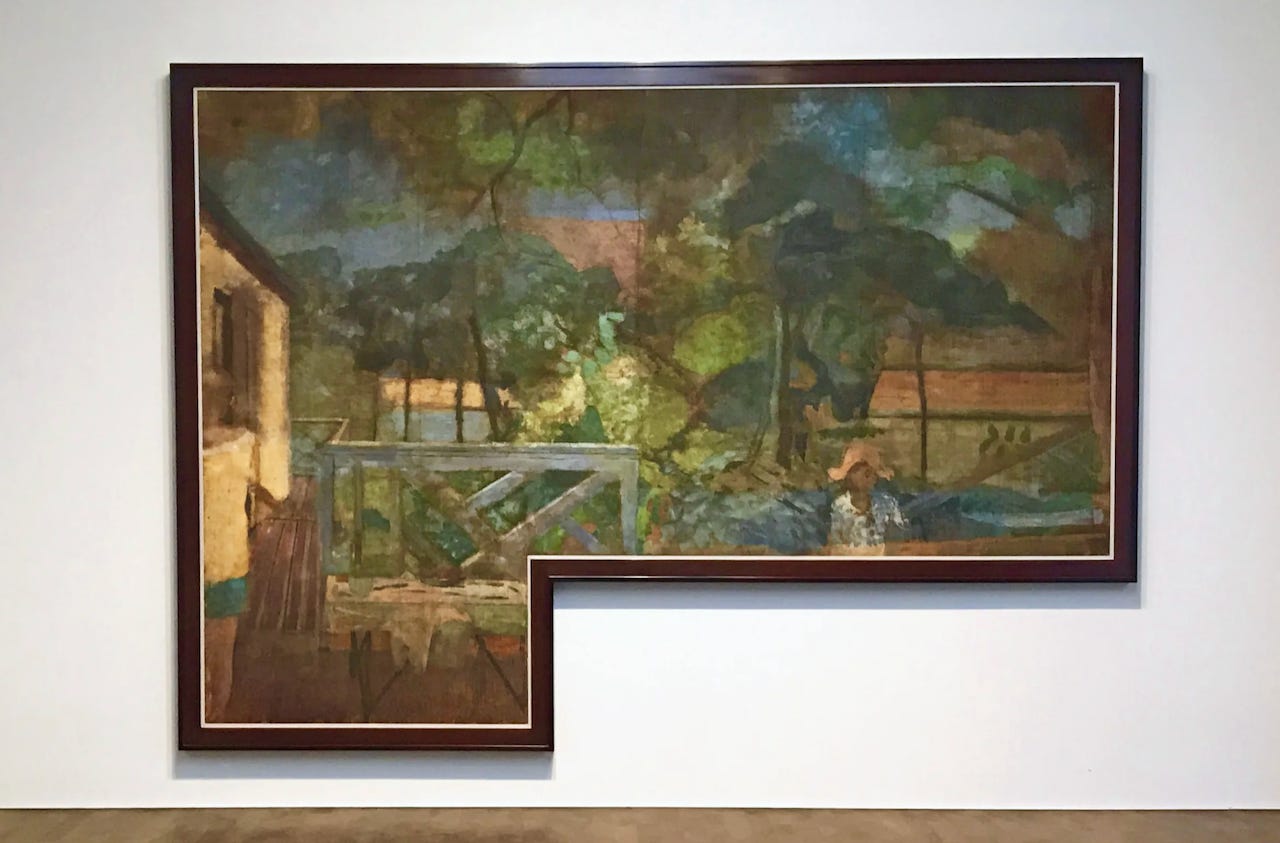
A few years prior, in 1957, he painted a mural after Bonnard that sat over a banquette. When it was removed from the wall and restored, in 2008, it was framed to keep its trademark L-shape.
Michael himself is pictured in Celia Paul’s Colony of Ghosts, the darker figure on the far right blending into the shadowy corner of the table.
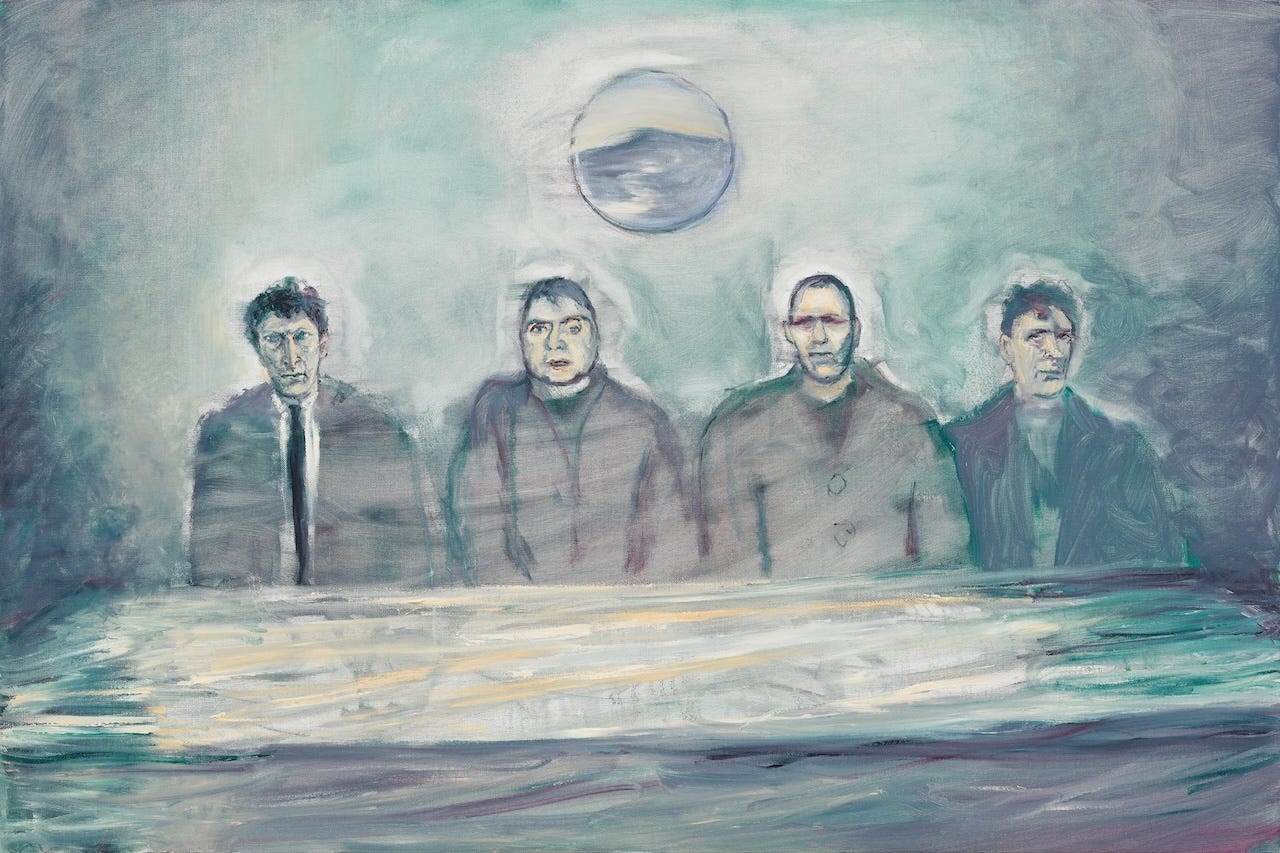
This is his position within this historical narrative: he is always the figure on the edge, painting the party if barely partaking, moving into the periphery, slowly traveling towards the space of the austere. He described his work:
“Identity and community—and identity in community; that’s my prevailing preoccupation.”
Melanie and Me Swimming was the first of a “Holiday” series, which went on to include a couple of incredible paintings of Michael and his companions on a deer hunt. While they share a landscape—the same Scottish estate—they are barely recognizable as the same series, and the deer pictures are more often lumped in with Michael’s landscapes of Scotland.
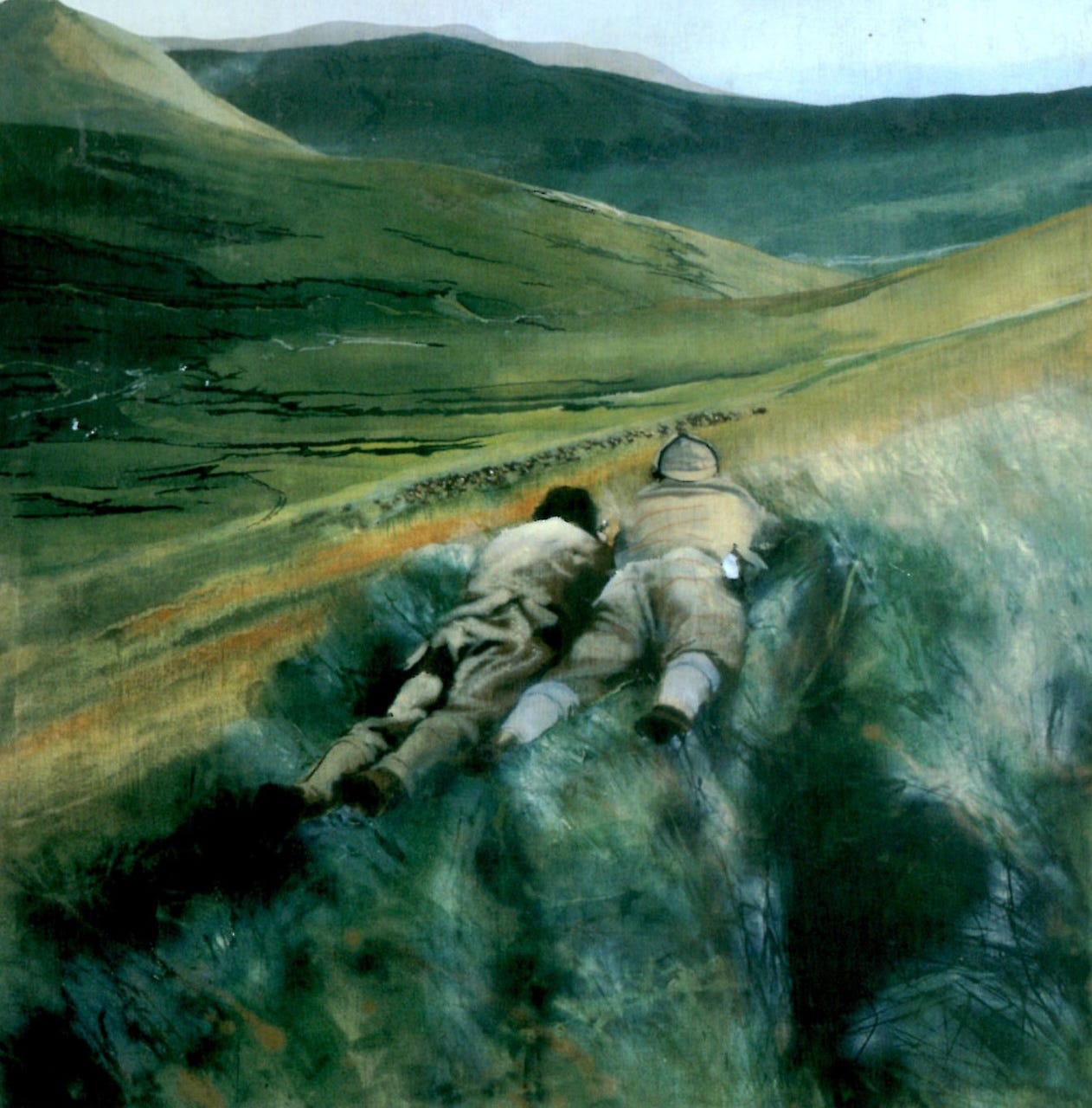
You can see something there, though, that engages with the swimming picture. Two figures alone in a natural landscape, a direct human bond that sits within the space of the sublime, engaged in activity face to face or shoulder to shoulder. Sport as an ethics of engagement with man and nature, maybe. Melanie and Me, as Melanie herself mentioned, also sits easily alongside the schools of fish. It is both-and, simultaneously within and without, a pool and a cosmos, a world unto itself that expands to swallow up darkness around it.
Always loved this painting, and having become a father a couple of years ago it connects with me even stronger..